
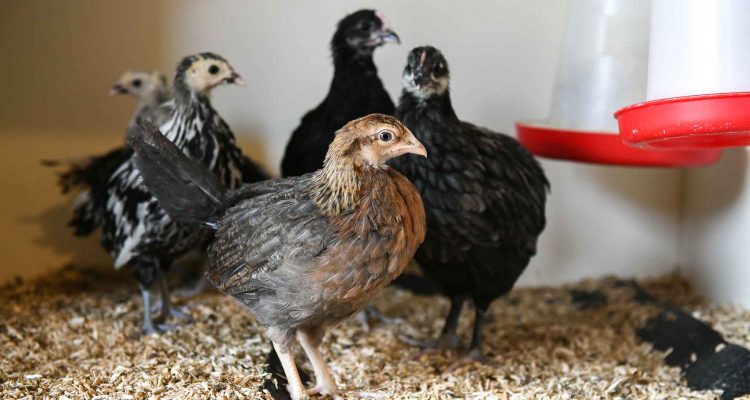
Some of our earliest memories of food have very little to do with supermarkets. For us, they involve backyards. One of Mum’s friends, Angela Gory — a wonderful French woman and an equally wonderful cook — kept chooks. So did our aunties Marika, Penelope and Areti — all incredible cooks in their own right. What we acknowledged quickly is that cooks, need chooks 🙂 and so do hungry children.
As children, we probably didn’t give much thought to how fortunate that was. You walked outside, opened a nesting box and there they were. Still warm if your timing was right. But the eggs were only part of it.
Chickens had personalities. There was always one with more attitude than the others. Another that followed you around. An obvious pecking order. Friendships. Squabbles. Rituals. They produced food, certainly, but they were also part of the household. Pets with benefits, if you like.
And perhaps that is what makes Talking Hens in Merricks such an interesting business. On one level, it has become something of a benchmark for backyard chicken keeping. Giuliana and Jason founded Talking Hens in 2012, later moving the business to Merricks, where it has developed into a genuinely useful destination for anyone contemplating keeping hens at home.
They know chickens. Really know chickens. Purebreds. Hybrids. Which birds are prolific layers. Which are particularly good around families. What they should eat. Where they should sleep. How to keep them healthy. How many you need. What sort of coop works. What happens when something goes wrong. And importantly, how to get started when you know absolutely none of the above.
Talking Hens now offers everything from different breeds and purpose-designed feeds through to locally handcrafted chicken coops, equipment and an extensive online resource covering most of the questions a first-time hen keeper is likely to ask. That expertise matters. But it is not really the reason we find Talking Hens so compelling.
The more interesting story is what happens after the chickens come home. Because somewhere along the way, many of us became extraordinarily disconnected from where our food comes from. Food arrives washed, graded, packaged, barcoded and refrigerated.
For younger generations particularly, the distance between the animal, the farm and the finished product can be enormous. An egg is something that comes in a carton. Milk comes in a bottle. Vegetables come wrapped in plastic.
We understand intellectually that there is a process behind all of it, but increasingly few of us have much contact with that process. Keeping a few backyard hens is one very simple way of changing that. No lifestyle revolution required. No acreage. No straw hat. No need to start referring to your suburban block as “the farm”. Just a few chickens.
Suddenly a child understands that breakfast did not begin at aisle two. Someone has to feed the hens. Give them fresh water. Collect the eggs. Clean the coop. Watch their health. And inevitably give them names. That last part tends to happen whether you intend it to or not.
Then something else begins. You start noticing them. Their behaviour. Their different temperaments. The one that muscles in first when food arrives. The quieter one hanging back. The escape artist. The boss. The slightly peculiar one that somehow becomes everybody’s favourite. It is a small education in animal behaviour, responsibility and food provenance happening in your backyard. And the reward is beautifully immediate. An egg. Fresh, traceable and produced by an animal you actually know. There is something deeply satisfying about that.
Talking Hens has spent more than a decade making this experience considerably easier for people. There are purebred birds for those attracted to particular breeds, characteristics and personalities, alongside hybrid hens bred to be dependable layers.
There are purpose-built coops designed around the realities of keeping chickens rather than simply looking pretty in a backyard. And feed is taken seriously. Their Sustainable Layer feed is part of a broader approach focused on giving backyard hens appropriate nutrition rather than treating chicken feed as an afterthought. It sounds obvious. Healthy birds generally require decent food, suitable housing and proper care. Funny how often the obvious things are the important ones.
Talking Hens also understands that not everybody arrives as an expert. Quite the opposite. Some customers come in knowing precisely which breed they want. Others probably start with something closer to: “We’ve been thinking about getting a few chooks…” And that is enough. The advice, education and ongoing support are a large part of what makes the business work.
We spend an enormous amount of time talking about sustainability, local food, provenance and reconnecting with nature. All worthwhile. But sometimes the easiest way to understand these ideas is simply to experience them. A couple of hens scratching around the backyard can probably teach a child more about where an egg comes from than a dozen carefully constructed lessons. They also teach something about care. Animals rely on you. Food requires effort.
Natural systems are imperfect. Sometimes there are lots of eggs. Sometimes there aren’t. Sometimes the chicken has other ideas. Useful lessons at almost any age. And there has arguably never been a better time to rediscover some of this. Not because everyone needs to become self-sufficient. Most of us won’t. But perhaps we could become a little more connected.
Connected to the origins of our food. To the animals that provide it. To the seasons and rhythms behind it. And, occasionally, simply to the pleasure of eating something produced metres from where you live.
Talking Hens has become one of the most trusted places to begin that journey. The birds are there. The coops are there. The feed is there. The information is there. And importantly, so are the people who can answer the slightly embarrassing questions you may think everyone else already knows. They probably don’t.
The lovely thing about backyard hens is that you do not need to know everything before you begin. You learn. The children learn. The chickens occasionally teach everyone who is actually in charge. And before long, they cease being “the chickens”. They become “the girls”. Which is usually the point when you realise they have become part of the family. Fresh eggs are simply the bonus.
If this resonates, our friends at Talking Hens in Merricks are there to help. And if you can’t get there in person, their website is an excellent resource and a very good place to start. In fact, they service many parts of Melbourne’s suburbs and greater Victoria.
Leave a Reply
You must be logged in to post a comment.