
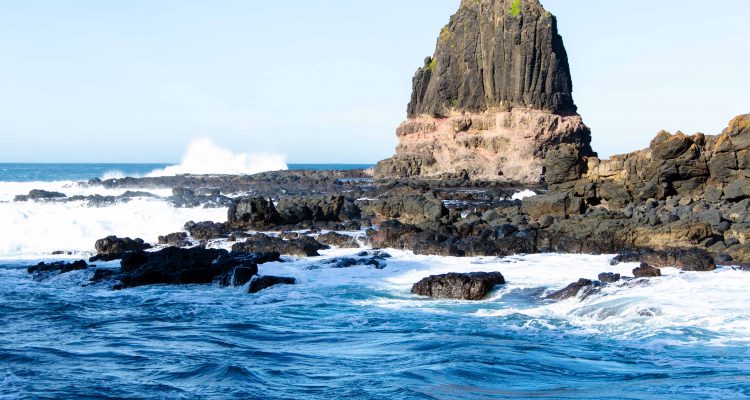
There are few places where the ocean feels this alive. At Cape Schanck on the Mornington Peninsula, the coastline doesn’t just meet the sea, it leans right into it, offering one of Victoria’s most reliable land-based whale watching experiences.
From May through to October, this rugged stretch becomes a migration corridor for Humpback and Southern Right whales as they travel through the waters of the Bass Strait. You don’t need a boat, just a good pair of eyes, a bit of patience, and a perch above the cliffs.
Where to Watch: The Best Vantage Points
The magic of Cape Schanck is in its elevation. The whales pass below, while you stand above, wrapped in wind and salt spray.
The most rewarding viewing spots include:
- The clifftop lookouts around the historic Cape Schanck Lighthouse reserve
- The walking tracks and boardwalks leading toward Pulpit Rock
- Open cliff edges where the ocean horizon stretches wide and uninterrupted
The lighthouse precinct adds a grounding sense of history to the experience, while the dramatic basalt cliffs do the rest of the storytelling.
What You Might See on the Water
Whale watching here is less about constant spectacle and more about quiet anticipation. Then suddenly, something breaks the surface.
Keep an eye out for:
- A misty spout rising like breath from the sea
- A slow rolling back just before a dive
- The flash of a tail as a whale disappears into deep water
- Occasional breaches when the ocean feels playful
Whales tend to travel along a relatively close coastal line during migration, using the shoreline like a guidepost as they move north in winter and south again in spring.
How to Spot Them Like a Pro
A little technique goes a long way here. The ocean is vast, but whales leave clues.
Try this approach:
- Scan first: Look across the horizon slowly rather than focusing in one spot
- Watch for movement: Spouts often appear as brief vertical plumes against the blue-grey water
- Then zoom in: Use binoculars once you’ve locked onto something unusual
- Be patient: Long still moments often precede the best sightings
Think of it less like hunting for action and more like reading a slow, shifting language written on the water.
Tracking Whale Movements
If you want to time your visit with a bit more precision, there are community tools that help map sightings along the Peninsula.
The Dolphin Research Institute runs the Two Bays Tracker, a citizen science initiative that monitors whale movement across the region. It’s a great way to see recent activity and even contribute your own sightings.
Local updates also circulate quickly through social channels, particularly the Two Bays Whales community on Facebook, where coastal watchers share real-time reports and photos. It can be surprisingly helpful when deciding whether to head out on a given day.
A Place That Changes With the Season
Cape Schanck doesn’t shout. It holds its space quietly, letting the wind, cliffs, and ocean do the talking. In whale season, that conversation becomes something extraordinary.
One moment it’s just waves and basalt rock. The next, the ocean exhales and a giant passes through.
If you time it right, you don’t just see whales. You witness a migration written across water, just offshore from the edge of the world.
Leave a Reply
You must be logged in to post a comment.